|
Benefits of Equipment Servers
Using an equipment server makes the task of integrating new and legacy equipment into a single,
fab-wide, integrated network more efficient, fast, and reliable. Our eSES White Paper provides a detailed analysis of the advantages of this approach.
With equipment servers, you
obtain the benefits that the three-tier computing architecture (user interface,
application logic, and real-world data access) brought to enterprise computing.
This networked architecture integrates equipment directly into the enterprise
information system using equipment servers that, like database servers,
directly interact with multiple, independent applications to
- Safely and flexibly provide
all equipment functions to multiple independent applications
- Create and deploy new
applications and functionality rapidly, without modifying large, complicated
host applications
- Integrate equipment control
with enterprise and supply-chain information systems
- Deploy applications to
remotely access worldwide distributed equipment
- Easily and rapidly expand
small installations to very large installations
- Empower departments to
implement independent applications for their requirements and to get
the information they need, directly
The fab before
installation of SES software:
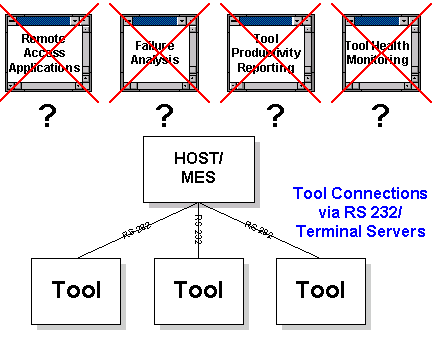
Equipment servers remove
a major cause of today’s inflexible manufacturing: reliance on host/slave
equipment control systems that require all applications to communicate
with equipment through a single host. Equipment servers solve the same
problems that mainframe users faced before the client-server revolution:
inflexible applications and costly, time-consuming modifications and extensions.
The fab after
installation of SES software:
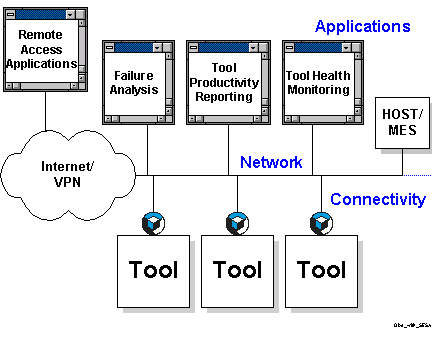
Equipment servers are
already being adopted by many leading manufacturing companies to monitor
and control their manufacturing processes, and to deploy information systems
from the board room to the shop floor. The benefits are undeniable, and
the trend is clear.
|